
- Mon-Fri 9am-5pm
- hello@innodez.com
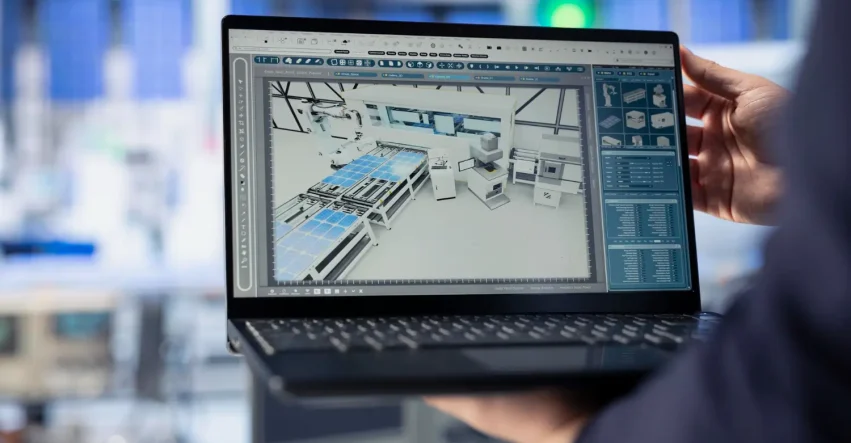
MEP contracting is the foundation for any successful building in the US. From towering offices to residential complexes, these contractors handle every aspect of mechanical, electrical, and plumbing design, installation, and coordination. It’s not just about putting systems in place—it’s about ensuring comfort, performance, and long-term value for every structure.
The role of MEP contracting companies goes beyond engineering. They troubleshoot, optimize, and deliver tailored solutions, adapting quickly to new technology and regulatory changes. In highly regulated American construction markets, errors can be costly. MEP contractors step in to prevent delays and preserve budgets.
Today, leading MEP contracting firms are leveraging Building Information Modeling (BIM) in every phase of the building process. BIM replaces traditional blueprints with interactive digital models. This technology lets contractors:
See all systems clearly, spot conflicts early, and keep teams working together from day one.
Use simulation tools to optimize complex layouts and forecast performance.
Adoption of BIM is now routine for high-quality US MEP contracting companies, with studies showing over eighty percent of major contractors using BIM for coordination and documentation.
BIM unlocks several key advantages for MEP contracting companies. Most notably, clash detection dramatically reduces rework—a recent survey found that BIM lowered average rework costs to less than two percent of the total project budget (compared to up to ten percent in conventional builds). Improved schedule accuracy means fewer delays and predictable delivery.
Material and labor costs are slashed thanks to precise modeling and resource management. BIM also helps contractors connect office and field operations in real time. For example, a California hospital project resulted in a documented 15 percent reduction in costs and a 20 percent faster timeline.
According to the latest numbers, seventy percent of BIM users in the MEP contracting field report measurable productivity gains and better communication across teams. This leads to:
Fewer mistakes during construction and installation.
Easier handover to maintenance and building operations teams.
Enhanced owner satisfaction through visible project control.
Choosing a Contractor: BIM in Action
Owners and developers should always ask potential MEP contracting partners about their BIM workflow. Are digital drawings updated across all trades? Is there robust clash detection before construction begins? Can the contractor provide models that help maintain systems for years to come?
BIM isn’t just about design—it’s about ongoing value. A strong BIM process means fewer surprises, easier compliance checks, and transparent coordination at every step.
MEP contracting is at the heart of sustainable building practices. BIM helps teams simulate energy use and environmental performance, resulting in smarter mechanical zoning and more efficient lighting systems. Owners save on utilities and comply with American green building standards like LEED and Energy Star.
Contractors using BIM also embrace prefabrication, manufacturing ducts, pipes, and wiring offsite with unparalleled precision. This method directly reduces waste and speeds up installation, making construction cleaner and safer for everyone involved.
A major trend reshaping MEP contracting in 2025 is prefabrication. Mechanical, electrical, and plumbing components are increasingly assembled offsite in controlled environments and then delivered ready to install. This practice improves quality, minimizes on-site labor, and accelerates project timelines—key advantages given the current labor shortages and demand for faster construction.
Modules and panelized systems reduce errors, waste, and weather delays, leading to more predictable costs and schedules. For owners and contractors in fast-growing markets like Texas and California, prefabricated MEP assemblies offer a critical competitive edge.
Beyond BIM and prefabrication, several important trends are reshaping how MEP contracting companies approach projects across the US. Digital integration continues to be a game-changer. Real-time data feeds and AI-powered tools help MEP firms optimize procurement, estimating, and design workflows. This facilitates faster, more accurate decisions and improved cost control.
Sustainability requirements are more demanding than ever. MEP contractors are investing in smart building technologies, energy-efficient materials, and water-conserving fixtures to meet stringent LEED, Energy Star, and state-specific codes. Workforce development is another priority as contractors train teams to excel with digital collaboration tools and emerging innovations.
Innodez sets the standard for BIM-driven MEP contracting by uniting expert designers, proactive coordinators, and advanced modeling technology. Every project starts with clash detection, energy simulation, and detailed digital plans. From feasibility to final handover, Innodez keeps all stakeholders in sync, delivering high-performing, code-compliant systems that meet every project need.
Clients working with Innodez consistently see projects delivered faster, with fewer unexpected costs, and a higher level of service throughout the building’s lifecycle.
MEP contracting will remain a cornerstone of the US building industry, but only companies that invest in BIM expertise will reach true excellence. Data from Autodesk and recent cost-benefit studies confirm that the best results come from teams who combine deep contracting knowledge with sophisticated technology.
The combination of BIM technology with innovative construction methods is driving a new era where projects are not only faster and more efficient but environmentally responsible and future-ready. For contractors, owners, and developers, partnering with a BIM-capable firm like Innodez transforms complex construction challenges into smooth, successful outcomes. Explore Innodez resources to learn how BIM-driven MEP contracting creates smarter buildings built to last.
For contractors, owners, and developers, choosing a BIM-enabled partner like Innodez turns complex construction into a streamlined, successful experience. Explore 7 Compelling Reasons You Require MEP Expertise and How InnoDez Simplifies the MEP Design Process for Builders for more guidance.
MEP contracting, powered by BIM, is how modern American buildings rise—smarter, faster, and built to last.


