
- Mon-Fri 9am-5pm
- hello@innodez.com
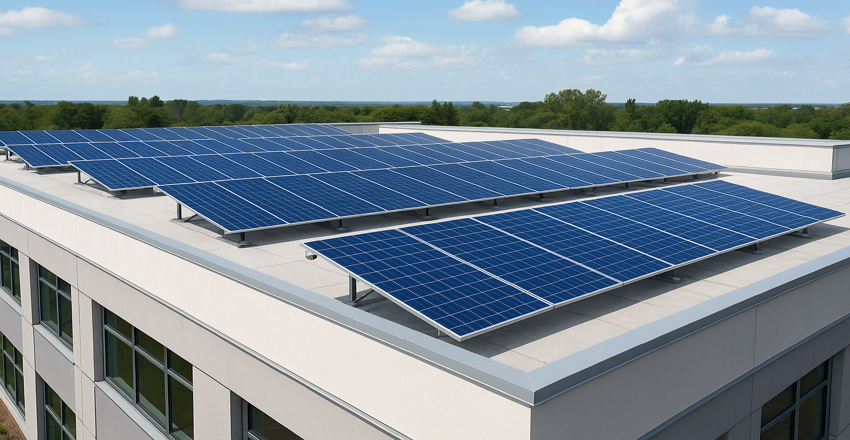
Solar power in commercial building design is no longer just a trend—it’s becoming a standard. As businesses aim to reduce operational expenses, meet sustainability goals, and stay ahead of future regulatory requirements, integrating solar energy solutions is a forward-thinking move. This article dives deep into the essential considerations for incorporating solar power into commercial projects, tailored to developers, architects, and building owners looking to embrace clean energy from the ground up. With the right planning and implementation, solar energy can transform the way commercial buildings operate.
The U.S. solar industry has experienced exponential growth in recent years, and it’s expected to dominate new electricity generation through 2025. As the cost of solar panels continues to decline and electricity rates rise, commercial buildings are increasingly turning to solar as a financially and environmentally sound solution. Solar power isn’t just good for the planet—it’s a strategic business decision with measurable ROI. Cities like Los Angeles, where green building mandates are strengthening, are becoming hotspots for commercial solar projects.
1. Reduced Operational Costs: Once installed, solar panels dramatically lower utility bills. Over time, these savings compound, offering significant long-term benefits. For large buildings, annual savings can reach tens of thousands of dollars, especially in states with high energy rates.
2. Increased Property Value: Commercial buildings equipped with renewable energy systems are more attractive to buyers, tenants, and investors. Sustainability is a value driver in modern real estate. Green-certified buildings also tend to have higher occupancy rates and tenant satisfaction.
3. Tax Incentives and Credits: Federal and state programs like the Investment Tax Credit (ITC) and Production Tax Credit (PTC) can offset up to 30% or more of installation costs, improving ROI. Additionally, accelerated depreciation under the MACRS schedule allows owners to recover investment costs more quickly.
4. Environmental Sustainability: Using solar reduces carbon emissions and dependence on fossil fuels, helping companies meet ESG goals and environmental certifications like LEED. It also enhances corporate image and public trust.
Before diving into solar integration, it’s crucial to assess whether the building is physically and technically suitable for solar installation:
Effective system design is critical for achieving maximum performance and ROI:
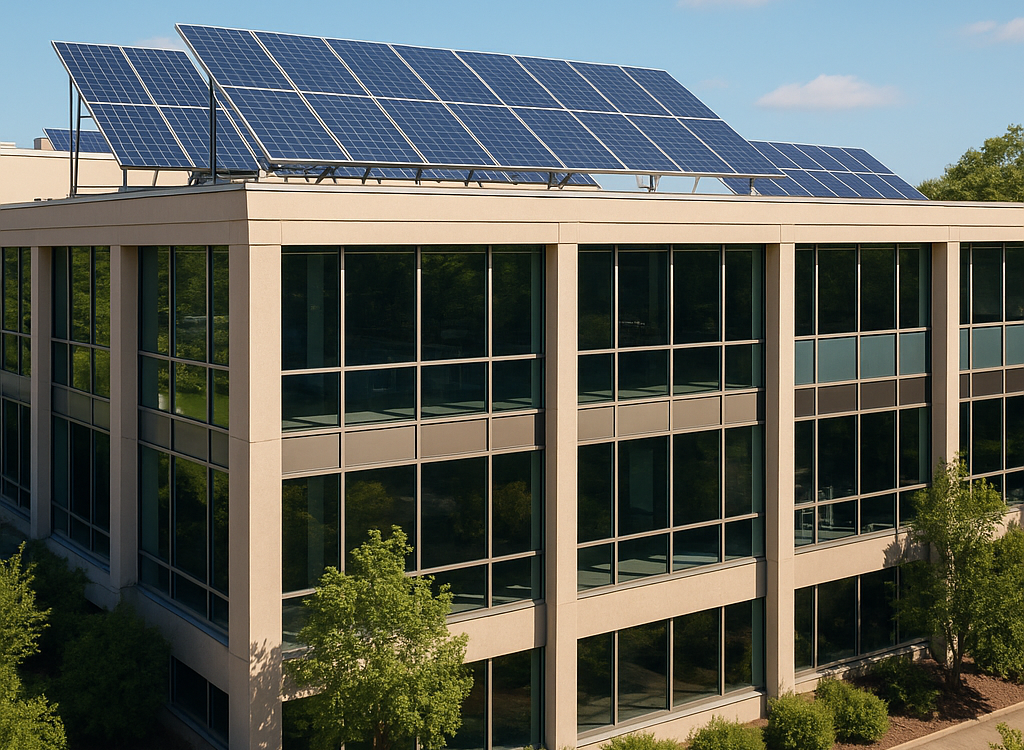
Adopting best practices during installation ensures long-term success and minimizes future maintenance:
Solar adoption is not without obstacles. Key challenges and solutions include:
Financing options play a pivotal role in determining project viability. Businesses can choose from outright purchase, solar leases, energy-as-a-service (EaaS), or PPAs. Each model offers unique benefits depending on the business’s cash flow and tax appetite. For example, a PPA shifts ownership and maintenance responsibility to the provider while guaranteeing a fixed electricity rate. Additionally, financial analysis should include payback period, internal rate of return (IRR), and net present value (NPV) to measure long-term benefits accurately.
In the United States, integrating solar power in commercial building design is not only viable—it’s essential. It aligns with cost-saving objectives, meets green building requirements, and demonstrates corporate responsibility. Whether you’re constructing a new facility or retrofitting an existing one, early planning and expert support from firms like Innodez can turn solar power from a complex initiative into a streamlined success. Embrace the future of energy—starting with your building’s roof. The investment you make today will empower your business for decades to come.


