
- Mon-Fri 9am-5pm
- hello@innodez.com
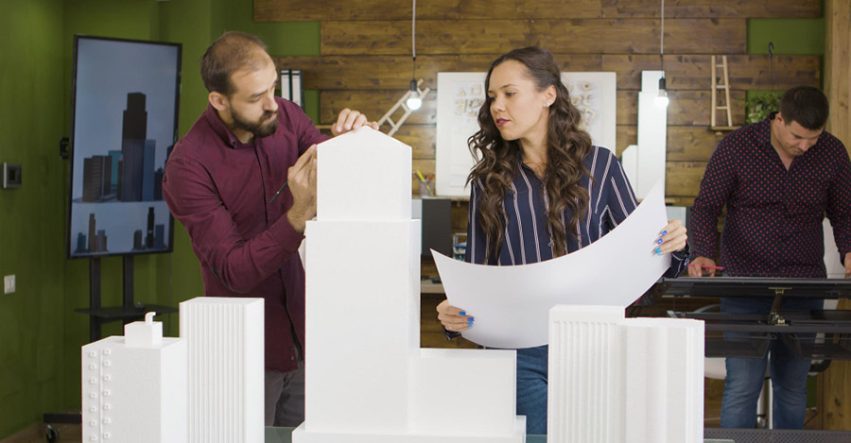
The construction industry has long been dependent on traditional materials and methods to design and build structures. However, as technology continues to advance, 3D printing is emerging as a revolutionary tool in structural engineering, offering new possibilities in construction that were once unimaginable. From faster construction times to reduced material waste, 3D printing is poised to reshape how buildings are designed and constructed.
In this blog post, we’ll explore how 3D printing is transforming structural engineering, its current applications, and how it might shape the future of the construction industry.
3D printing, also known as additive manufacturing, involves the process of creating three-dimensional objects from a digital file by layering materials. In the context of structural engineering, 3D printing is used to create building components, structures, and even entire buildings using concrete, steel, and composite materials.
By using 3D printers, engineers can create complex designs that are more cost-effective and efficient than traditional construction methods. With 3D printing, materials are deposited layer by layer, allowing for precise control over the shape and structure of the finished product.
In the construction industry, 3D printing begins with a digital model of the structure to be built. This file is created using CAD (Computer-Aided Design) software, which then translates the design into a printable format. The printer reads this file and lays down successive layers of material to form the structure.
The materials used in 3D printing for construction include concrete, metal alloys, and composite materials, which are often chosen based on the project’s specific requirements. 3D printers capable of constructing large-scale objects typically use robotic arms or gantry systems, which print building components such as walls, beams, and structural frameworks.
One of the most significant benefits of 3D printing in construction is efficiency. Unlike traditional construction, which requires a great deal of manual labor and time, 3D printing allows structures to be printed quickly with reduced material waste. This leads to faster construction times and cost savings.
Additionally, 3D printing enables complex designs that are difficult or impossible to achieve using traditional building methods. For instance, intricate facades, curvatures, and geometric patterns that would typically require expensive molds or specialized labor can now be printed with ease.
Another key benefit of 3D printing is customization. Builders and architects can create bespoke designs for each project without incurring extra costs, which is especially valuable in the development of high-end residential and commercial buildings.
Although still a relatively new technology, 3D printing has already demonstrated impressive potential in construction. Here are some notable real-world applications:
Looking ahead, 3D printing holds great promise for the future of structural engineering. As the technology continues to evolve, we may see buildings and structures built entirely by automated 3D printing systems, reducing the need for human intervention.
In the coming years, we expect to see:
The integration of these advanced technologies will lead to even greater efficiencies, cost savings, and sustainability in construction.
Despite its many advantages, 3D printing still faces a few challenges that need to be addressed before 3D printing becomes a mainstream construction method:
One of the most significant advantages of 3D printing is its ability to reduce the environmental impact of construction. By minimizing material waste, using recycled materials, and reducing the energy consumption required for traditional construction, 3D printing offers a much greener approach to building.
Additionally, 3D printed buildings are often designed to be more energy-efficient, with features like better insulation and airflow systems integrated into the design, reducing long-term environmental impact.
3D printing is revolutionizing the way we approach structural engineering and construction. With its ability to improve speed, reduce costs, and create complex designs with minimal waste, it’s clear that 3D printing is here to stay. As technology continues to evolve, the possibilities for 3D printed buildings are endless, and the future of construction will likely look very different from what we see today.
At InnoDez, we are committed to staying at the forefront of innovative solutions, ensuring that we can deliver cutting-edge, energy-efficient, and sustainable buildings. If you’re interested in learning more about how InnoDez can help with your next project, contact us today.
Explore how MEP systems contribute to creating sustainable and energy-efficient buildings in our MEP Design Services.


