- Mon-Fri 9am-5pm
- hello@innodez.com
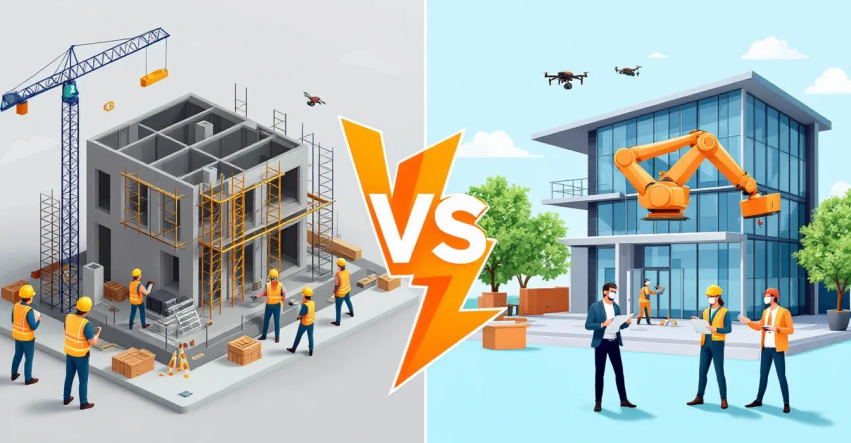
Trying to decide between Design Build vs Traditional Construction for your project? This article breaks down the key differences, benefits, and factors to consider for each method. By understanding these, you can make an informed choice tailored to your project’s specific needs.

Traditional construction uses the Design-Bid-Build method, where separate entities handle design and construction phases. Here, the project owner coordinates multiple consultants and contractors, ensuring that each phase transitions smoothly into the next. This method often involves distinct contracts for design and construction, which can lead to potential miscommunication and fragmented accountability.
In contrast, the Design-Build method combines design and construction under one contract, streamlining the process under a single entity’s management. This unified approach eliminates traditional bidding and negotiation stages, fostering greater collaboration among design and construction professionals. The Design-Build method is renowned for its efficiency and the seamless integration of all project phases, enhancing overall project control and reducing the likelihood of disputes.
Selecting between these methods depends on understanding their unique benefits and considerations. Traditional construction allows for greater owner oversight, while Design-Build offers a more cohesive and efficient project delivery. The decision ultimately depends on the specific goals and constraints of your construction project.

A construction project’s project delivery method greatly affects efficiency, timeline, and cost. Traditional construction, with its distinct contracts for design and construction, often leads to potential miscommunication and fragmented accountability. Owners manage multiple contracts, which can complicate project management and increase the risk of conflicts. This method also involves a competitive bidding process that, while potentially lowering initial costs, can lead to higher overall expenses due to frequent change orders and inefficiencies.
The Design-Build method, however, integrates design and construction teams under one contract, simplifying accountability and communication. This approach reduces the likelihood of disputes and enhances cost control by fostering collaboration between design and construction teams. The integrated project delivery of Design-Build allows for better budget management and faster project completion, as decisions are made collaboratively, and adjustments can be implemented swiftly.
Project owners must weigh the benefits of these methods against their specific project needs. While Traditional Construction offers more control over subcontractor selection, Design-Build provides a unified team responsible for delivering the entire project, enhancing efficiency and reducing risks.
Effective communication and collaboration are crucial for a successful construction project. In Traditional Construction, the separation of design and construction phases often leads to communication challenges and coordination issues. Multiple contracts and fragmented roles can complicate accountability and increase the risk of miscommunication, which may result in delays and quality issues.
In contrast, the Design-Build approach ensures streamlined communication from the project’s start. By having the design and construction team work for the same entity, Design-Build reduces administrative burdens and provides a single point of accountability. This integrated approach encourages improved teamwork, consistent collaboration, and real-time problem-solving, minimizing the risks associated with communication barriers.
Real-world examples showcase how Design-Build enhances communication and collaboration. For instance, during a hospital renovation, InnoDez’s Design-Build methodology ensured smooth integration, significantly improving overall project coordination and reducing rework. Such examples underscore the value of streamlined communication channels in delivering successful construction projects.

Cost is a crucial factor in any construction project, and the chosen method greatly influences budget management. Traditional construction often appears cheaper initially due to competitive bidding. However, this method frequently experiences higher total costs due to change orders and inefficiencies that arise during the project’s progression. The segmented approach can also complicate accountability for cost overruns, making it challenging to maintain strict budget control.
Design-Build projects, on the other hand, usually lead to lower overall costs. The integration of design and construction phases reduces the likelihood of budget overruns and allows for more accurate initial cost estimates. Design-Build’s collaborative approach facilitates better cost control and efficiency, often leading to significant cost savings. For example, Design-Build projects have been shown to experience cost growth up to 5.2% less and unit costs approximately 6% less compared to Traditional Construction.
Additionally, faster completion times in Design-Build contribute to cost efficiency. By streamlining the project delivery process and reducing delays, Design-Build helps keep projects on budget and on schedule, providing a more predictable and manageable financial outcome.
Risk management is crucial in any construction project. Traditional construction places most of the risk on the project owner, who manages multiple contracts with different designers and builders. This fragmented structure complicates accountability and can affect project quality and outcomes. Effective communication among project stakeholders is crucial for discussing potential risks and collaborating on mitigation strategies.
In contrast, Design-Build improves risk management by sharing risks between the owner and the contractor. With a single entity responsible for both design and construction responsibilities, Design-Build provides clearer accountability and reduces the likelihood of disputes. Contractors take on significant liability for the design’s compliance with standards and regulations, ensuring a higher level of project quality.
This integrated approach allows for thorough risk assessment and continuous monitoring, adapting to new or evolving risks during construction.

Efficiency and timely completion are essential in the construction industry. Traditional construction’s segmented approach often results in longer project timelines. The sequential nature of this method, coupled with issues such as multiple contracts and stakeholders, can contribute to delays and higher risks in timelines. This can result in extended project schedules and increased costs.
Design-Build projects, however, can be completed up to 33.5% faster than traditional construction methods. Integrating design and construction phases speeds up project timelines by streamlining decision-making and communication.
This unified approach allows for faster project completion and improved efficiency, as seen in several successful projects managed by InnoDez. Design-Build’s ability to deliver projects swiftly and efficiently makes it an attractive option for project owners looking to minimize delays and maximize cost savings.
Owner involvement and control can vary greatly between construction methods. In traditional construction, the owner has more direct control due to separate contracts with various contractors. This method allows owners to influence the design before bidding begins, providing an opportunity for greater customization and direct management of multiple contractors. Owners can have a more hands-on role in deciding on design and materials selections.
In contrast, Design-Build typically provides less oversight over design details, which can reduce the influence owners have during the design phase. Owners generally have a single point of contact, simplifying communication but potentially limiting control.
In Design-Build projects, about 30% of owners have direct input during the design phase, showing the variation in control compared to traditional construction. While this approach can streamline the construction process, it may not be suitable for owners who prefer a more active role in project management.
Flexibility and innovation drive success in construction projects. The Design-Build approach enhances adaptability, allowing for adjustments during construction to meet changing project needs. The integrated approach of Design-Build encourages creative problem-solving and promotes the development of innovative solutions. This flexibility can result in higher quality outcomes and more efficient project delivery.
Traditional construction methods, with their segmented structure and numerous contracts, may lack the same level of adaptability and innovation. The separation of design and construction phases can limit the ability to implement changes swiftly and efficiently in traditional construction projects.
However, traditional construction allows for specialization by engaging different experts for each phase, which can also lead to innovative solutions. The choice between these methods depends on the project’s specific needs and the owner’s preference for flexibility and innovation.
Quality and expertise are vital considerations in any construction project. The Design-Build method utilizes in-house expertise in both design and construction, facilitating seamless collaboration and reducing risks associated with communication gaps. This unified team approach ensures higher quality work and more efficient project delivery.
Traditional construction allows specialization by engaging various experts for design and construction phases, which can also yield high-quality outcomes. However, the separation of these phases can complicate communication and coordination, potentially affecting the project’s overall quality.
Both methods depend on the expertise of design and construction professionals but deliver it through different structures. The choice between these methods should consider the project’s complexity and the owner’s preference for quality and expertise.

Real-world examples showcase the effectiveness of the Design-Build method in delivering successful projects. InnoDez, a leading provider of MEP and Structural Engineering services, has completed over 4,800 projects nationwide, showcasing the benefits of Design-Build. One notable project is the luxury apartment complex in Los Angeles, which featured a podium incorporating parking, a swimming pool, and a rooftop garden, blending seamlessly with the city’s skyline.
InnoDez’s client-centric approach and commitment to building strong, lasting relationships have been key to their success. Their use of advanced software like Revit and AutoCAD enables precise, innovative designs that meet the unique needs of each project.
Prioritizing collaboration and efficiency, InnoDez has shown the advantages of the Design-Build method in delivering high-quality, timely, and cost-effective projects.
Choosing the right construction method depends on factors like project-specific requirements, cost-effectiveness, communication, delivery speed, custom elements, and budget constraints. Traditional construction methods offer more owner control and customization but may involve longer timelines and higher risks of cost overruns. The traditional construction method provides a structured approach that can be beneficial in many scenarios.
The Design-Build method, however, offers a more integrated and efficient approach, enhancing collaboration, reducing risks, and often resulting in faster project completion and cost savings. Understanding the cost implications of each method helps in making an informed choice. Considering the timeline also helps ensure it aligns with your scheduling needs.
Whether you prioritize control and customization or efficiency and collaboration, carefully evaluating these factors will guide you in making the right decision for your construction project.
In conclusion, both Design-Build and Traditional Construction methods offer unique advantages and challenges. Design-Build excels in efficiency, cost control, and collaboration, while Traditional Construction allows for greater owner control and customization. By understanding the key differences and evaluating your project’s specific needs, you can choose the method that best aligns with your goals and constraints. May your next construction project be a resounding success, guided by the insights you’ve gained here.
A key aspect of InnoDez’s service delivery is its client-centric approach, making it easy for clients to collaborate effectively.
InnoDez specializes in MEP (Mechanical, Electrical, and Plumbing) and Structural Engineering services for various sectors, including commercial, residential, and industrial projects. Their expertise ensures comprehensive support across engineering needs.
InnoDez has successfully completed over 4,800 projects nationwide.
InnoDez can deliver MEP engineering solutions within a swift timeframe of 2-4 weeks. This rapid turnaround allows clients to move forward with their projects efficiently.
InnoDez provides services across all 50 states.


