
- Mon-Fri 9am-5pm
- [email protected]

Faster approvals come down to submitting a complete, internally consistent permit set the first time. InnoDez provides engineering design services for developers that combine MEP, structural, and civil work in one coordinated team, so plan reviewers find fewer conflicts and request fewer revisions. This article explains how that approach shortens review cycles, which sectors InnoDez serves, and how a developer can begin a partnership.
The stakes are measurable. A 2025 study covering 1.1 million permits across 60 US cities found that permitting delays, not construction itself, account for 30 to 43 percent of the timeline gap between the slowest and fastest cities (HousingWire, 2025). For developers, the review queue is often the longest part of the schedule.
Permitting slows down when disciplines are designed in isolation and conflict on paper. InnoDez keeps mechanical, electrical, plumbing, structural, and civil design under one roof, so a permit set reads as one coherent document rather than three that disagree. Reviewers spend less time flagging mismatches, and developers spend less time chasing corrections between separate consultants.
The gap between slow and fast approval markets is large. The 2025 HousingWire analysis found a 20-unit apartment project takes about 4.6 years in San Francisco, New York, or Los Angeles, compared with roughly 2 years in Raleigh, Orlando, or Phoenix. Much of that difference traces back to review friction, not the physical build.
A single multidisciplinary team removes one common source of that friction: documents that were never checked against each other before submission. When the structural engineer, the MEP designer, and the civil engineer work from the same model and the same assumptions, the package that reaches the jurisdiction is already reconciled.
Incomplete or conflicting documents are expensive. Autodesk and FMI estimated that bad data, meaning inaccurate, incomplete, or untimely information, drove roughly 88 billion dollars in avoidable rework globally in 2020, part of 1.8 trillion dollars in total losses (Construction Dive, 2021). Documentation quality is a cost center, not a formality.
InnoDez treats coordination as a deliverable, not an afterthought. Clash detection, cross-discipline checks, and a shared model catch the conflicts that otherwise surface as correction comments during plan review. Each avoided comment is a revision cycle that never happens.
That discipline matters most on the systems developers rarely see until something breaks. For a closer look at how early coordination prevents field conflicts, see our guide on MEP coordination and avoiding clashes before construction.
A clean first submission changes the tone of the whole review. When a plan examiner opens a set and finds the disciplines already agree, the questions shrink to genuine code interpretation rather than basic consistency errors. That is where turnaround time is won.
Code requirements shift sharply from one building type to the next, and sector experience shortens the path to an approvable set. InnoDez designs across five sectors: commercial, healthcare, hospitality, industrial, and residential. Each carries its own review expectations, from hospital infection-control airflow to warehouse structural loading to multifamily plumbing stacks.
A healthcare submission answers to life-safety and ventilation standards that a retail shell never touches. An industrial warehouse hinges on structural spans and drainage that a hotel does not. Knowing which questions a given jurisdiction will ask about a given sector means those answers are already in the drawings before the reviewer asks.
That sector depth also informs value engineering. A team that has designed dozens of hospitality electrical rooms or multifamily plumbing risers can propose code-compliant simplifications that a generalist would miss. For developers working across building types, that range is the practical meaning of engineering design services built for their pipeline.
Review cycles stall in the gaps between people, so communication is as much a schedule tool as a courtesy. InnoDez assigns a clear point of contact and predictable turnaround windows, so a developer always knows who answers a reviewer comment and when the revised set returns. A single accountable team removes the finger-pointing that happens when separate consultants each blame the other's drawings.
The cost of slow cycles is quantifiable. The same 2025 HousingWire study estimated that bringing Los Angeles permitting up to Texas-level speed could cut about 21 percent of construction costs, much of it tied to carrying time and financing. Every week shaved off the review loop protects the pro forma.
Coordinated turnaround depends on how a team handles revision requests. When a jurisdiction returns comments, InnoDez routes each one to the right discipline, resolves cross-impacts internally, and reissues a reconciled set rather than a patchwork of independent edits. That keeps the resubmission as clean as the original.
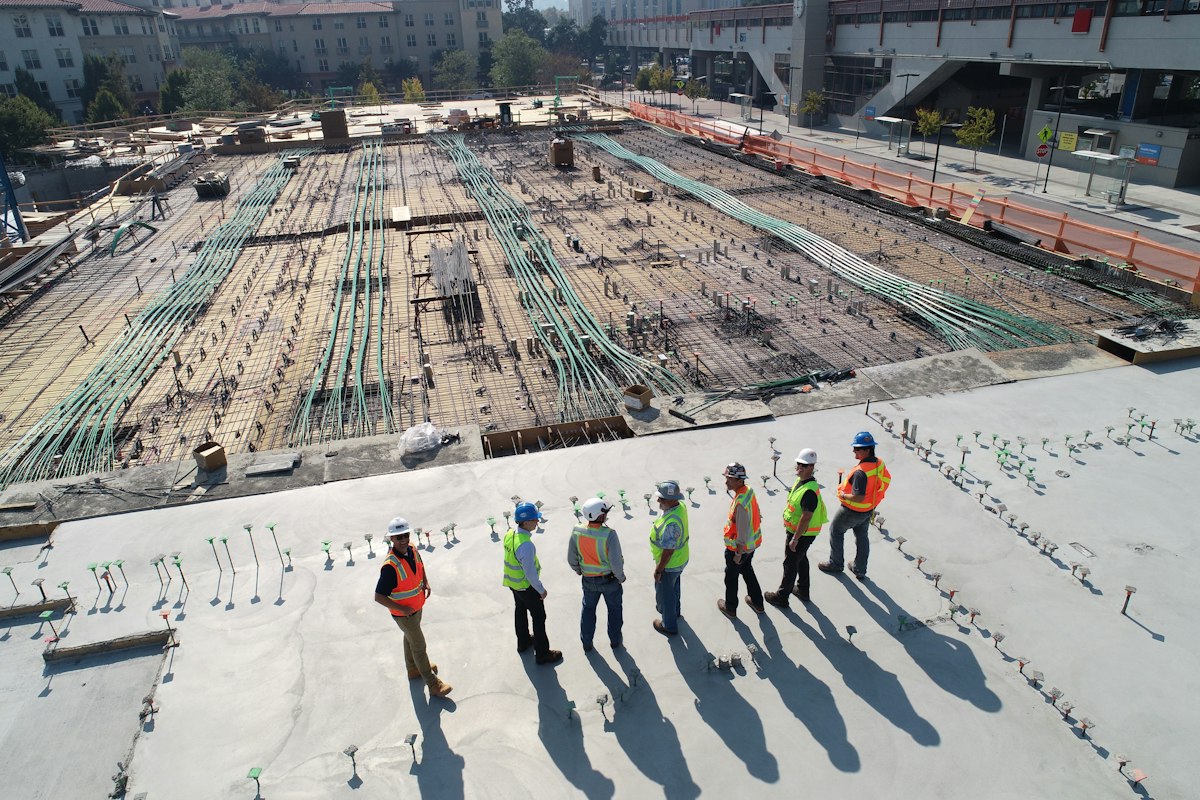
Starting early is the single biggest lever a developer controls. The most productive partnerships begin before layouts are locked, when design choices can still absorb MEP, structural, and civil input without triggering rework. A short, scoped design review is a low-commitment way to test fit before a full permit package.
A typical first step looks like this:
Developers weighing an outside team against building internal capacity should compare the fixed cost of a salaried staff against a scoped engagement priced to the actual project load.
The concrete next step is simple: pull together your concept set and target jurisdiction, and request a scoped design review so the first permit submission is coordinated from day one rather than corrected after it.
They are the mechanical, electrical, plumbing, structural, and civil design packages a developer needs to secure permits and build. InnoDez provides all three disciplines together so documents stay coordinated and review-ready.
When MEP, structural, and civil drawings are produced by one coordinated team, conflicts are caught before submission. That reduces the back-and-forth revision cycles that stall plan review and delay approval.
InnoDez designs for commercial, healthcare, hospitality, industrial, and residential projects. Each sector carries distinct code requirements, and sector experience shortens the learning curve on a new submission.
Bringing an engineer in during early design, before layouts are locked, gives the most value. Early coordination prevents expensive rework and keeps the permit set clean from the first submission.


