
- Mon-Fri 9am-5pm
- [email protected]
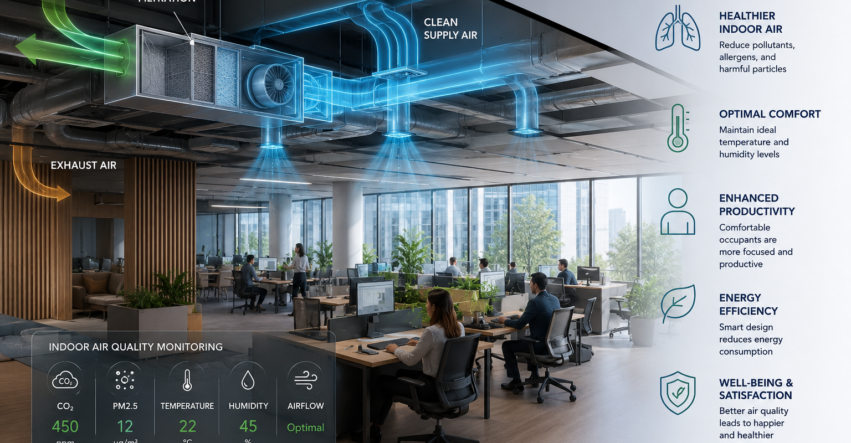
Modern buildings are no longer evaluated solely by their appearance, energy efficiency, or construction quality. Today, the health, comfort, and wellbeing of occupants play a major role in determining the success of a building. Whether it’s an office, residential development, hotel, healthcare facility, or educational institution, indoor air quality and occupant comfort have become essential components of climate control design.
At InnoDez, we design HVAC and MEP systems that create healthier, more comfortable indoor environments while maintaining energy efficiency and regulatory compliance.
People spend approximately 90% of their time indoors, making indoor air quality (IAQ) one of the most important factors affecting health, productivity, and comfort. Poor indoor air quality can lead to various issues, including:
A well-designed climate control system helps maintain clean, fresh air while controlling temperature and humidity levels throughout the building.
Occupant comfort goes beyond simply maintaining a desired temperature. Several factors influence how comfortable people feel inside a building, including:
Effective climate control design considers all these variables to create an environment where occupants can work, live, or relax comfortably.
HVAC systems are the primary mechanism for controlling indoor environmental conditions. A properly engineered HVAC system helps:
Without proper HVAC design, even modern buildings can experience poor indoor environmental quality.
Ventilation is one of the most critical aspects of climate control design. It ensures that stale indoor air is replaced with fresh outdoor air while removing pollutants generated by occupants, equipment, and building materials.
Benefits of proper ventilation include:
Modern ventilation systems are carefully designed to balance fresh air requirements with energy efficiency goals.
Humidity plays a significant role in how people perceive indoor comfort.
Climate control systems must maintain appropriate humidity levels throughout the year to support both comfort and building health.
Modern buildings often incorporate advanced filtration systems to improve indoor air quality.
Common solutions include:
These technologies help reduce airborne pollutants and create healthier indoor environments.
Commercial facilities face unique indoor air quality challenges due to higher occupancy levels and longer operating hours.
Proper ventilation and temperature control help improve:
Climate control systems help create pleasant shopping environments while maintaining energy efficiency.
Guest comfort depends heavily on quiet HVAC operation, consistent temperatures, and excellent air quality.
Indoor air quality is especially critical in healthcare environments where infection control and ventilation requirements are more stringent.
Homeowners increasingly prioritize healthy indoor living environments.
Residential climate control design can improve:
Modern residential HVAC systems often incorporate advanced filtration and ventilation solutions to support healthier living spaces.
Building automation and smart HVAC controls allow climate control systems to respond dynamically to changing conditions.
Smart technologies can:
These systems help create healthier and more efficient indoor environments.
One of the biggest challenges in climate control design is balancing occupant comfort with energy performance.
Effective HVAC engineering achieves both goals through:
A well-designed system can improve comfort while reducing operating costs.
Building codes and sustainability standards increasingly emphasize indoor environmental quality.
Climate control systems may need to comply with requirements related to:
Early coordination during the design process helps ensure compliance while supporting project goals.
At InnoDez, we integrate indoor air quality and occupant comfort considerations into every HVAC and MEP design project.
Our services include:
By combining engineering expertise with a focus on occupant wellbeing, we help create healthier, more comfortable, and more efficient buildings.
Indoor air quality and occupant comfort are no longer optional considerations in modern building design. They directly impact health, productivity, satisfaction, and overall building performance.
Through thoughtful HVAC engineering and climate control design, building owners and developers can create environments that support occupant wellbeing while achieving energy efficiency and long-term operational success.
Whether designing a commercial facility, residential development, healthcare center, or mixed-use project, prioritizing indoor air quality and occupant comfort is essential for creating buildings that perform better today and into the future.


