
- Mon-Fri 9am-5pm
- [email protected]
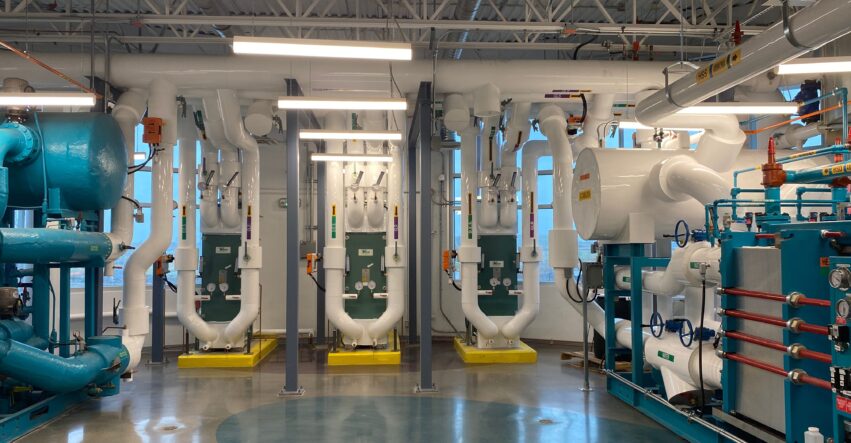
Healthcare facilities are among the most complex building types in the construction industry. Unlike commercial offices, residential developments, or retail spaces, hospitals and healthcare environments operate continuously, accommodate vulnerable occupants, and depend on highly reliable building systems to support patient care.
Every aspect of a healthcare facility—from operating theatres and diagnostic suites to patient wards and laboratories—relies on carefully designed mechanical, electrical, and public health (MEP) systems.
Failure of a ventilation system, electrical supply interruption, or water contamination issue can have serious consequences that directly impact patient safety, clinical operations, and regulatory compliance.
As healthcare providers continue to expand facilities, modernise infrastructure, and adapt to evolving healthcare demands, specialist MEP engineering has become essential to delivering safe, efficient, and resilient medical environments.
Healthcare buildings have significantly different operational requirements compared to conventional commercial developments.
Design teams must consider factors such as:
Unlike standard buildings where comfort is often the primary objective, healthcare facilities must balance comfort, safety, hygiene, and functionality simultaneously.
This complexity requires close coordination between architects, clinicians, engineers, contractors, and facility managers throughout the project lifecycle.
Mechanical systems play a vital role in maintaining safe healthcare environments.
Temperature control, ventilation performance, humidity management, and air quality directly influence patient outcomes and staff wellbeing.
Ventilation is one of the most important building services in healthcare facilities.
Different areas require different environmental conditions.
For example:
Mechanical engineers must carefully design airflow patterns, filtration systems, and pressure relationships to minimise contamination risks and support infection control protocols.
Healthcare facilities cannot afford prolonged system failures.
As a result, HVAC systems are often designed with redundancy measures that allow operations to continue during equipment maintenance or unexpected failures.
These strategies may include:
Reliability is often as important as efficiency when designing healthcare mechanical infrastructure.
Electrical systems are the backbone of modern healthcare facilities.
Medical equipment, life-support systems, imaging technology, communication networks, security systems, and building controls all depend on continuous power availability.
Power interruptions in healthcare environments can have severe consequences.
Healthcare electrical engineers must design systems capable of maintaining operations during utility outages.
This often includes:
These systems ensure that critical medical services remain operational even during emergencies.
Modern healthcare facilities rely on increasingly sophisticated technologies.
Equipment such as:
requires careful electrical planning, load analysis, and infrastructure coordination.
Engineers must anticipate both current requirements and future technological advancements to create flexible and scalable systems.
Public health engineering extends beyond basic plumbing design in healthcare environments.
Healthcare water systems must support hygiene, patient care, and infection prevention objectives.
Waterborne pathogens can present serious risks in healthcare settings.
Public health engineers design systems that minimise contamination risks through:
Maintaining water quality is essential for patient safety and regulatory compliance.
Many healthcare facilities require specialised gas distribution networks that support patient treatment.
These systems may include:
Medical gas infrastructure must meet strict design, installation, and operational standards to ensure safe clinical performance.
Healthcare-associated infections remain a major concern for healthcare providers worldwide.
Engineering systems play a crucial role in reducing transmission risks.
Design strategies may include:
By integrating infection control principles into MEP design, healthcare facilities can create safer environments for patients, visitors, and staff.
Healthcare construction projects involve numerous stakeholders and highly complex building systems.
Building Information Modelling (BIM) helps manage this complexity through digital collaboration and coordination.
Benefits include:
Healthcare facilities often contain dense service installations within limited ceiling spaces, making BIM particularly valuable during design and construction.
Healthcare buildings are typically energy-intensive due to their continuous operation and stringent environmental requirements.
Despite these challenges, sustainability remains a growing priority across the healthcare sector.
Engineering strategies for reducing environmental impact may include:
The challenge lies in improving efficiency without compromising patient care or operational reliability.
Healthcare infrastructure continues to evolve in response to demographic changes, technological advancements, and sustainability goals.
Emerging trends include:
Engineering teams must remain adaptable to support future healthcare delivery models while maintaining strict safety and performance standards.
Healthcare facilities demand a level of engineering precision that exceeds most other building types.
At InnoDez, our multidisciplinary teams provide coordinated MEP engineering and BIM services that support healthcare projects from concept design through construction and facility operation.
By combining technical expertise, digital coordination, and a thorough understanding of healthcare requirements, we help project teams create safe, efficient, and future-ready healthcare environments.
Healthcare buildings rely on highly specialised MEP systems to maintain patient safety, operational continuity, and regulatory compliance.
From advanced ventilation and backup power systems to medical gas infrastructure and infection control strategies, every engineering decision can have a direct impact on healthcare outcomes.
As healthcare facilities continue to evolve, integrated MEP engineering will remain essential to delivering resilient, efficient, and high-performing environments that support modern patient care while meeting the challenges of the future.


