
- Mon-Fri 9am-5pm
- [email protected]
Engineering business water usage is the total water a building project consumes across plumbing fixtures, mechanical systems, irrigation, and process loads, and it is controlled almost entirely by decisions made during design. Developers who treat water as a design parameter rather than an afterthought cut operating costs, meet code faster, and qualify for sustainability credits that raise asset value.
Water touches nearly every discipline on a commercial project. Plumbing and mechanical systems draw it, civil infrastructure delivers and drains it, and the site itself demands it for landscaping and cooling. This guide explains why that matters, where the biggest savings live, and how MEP and civil design lower consumption without compromising performance.
Water is both an operating cost and a compliance obligation, and the numbers are large enough to change a project's budget. Since 2006, EPA's WaterSense program alone has saved 8.7 trillion gallons of water and $207 billion in combined water and energy bills (EPA WaterSense, 2024). For a single building, inefficient fixtures and systems quietly inflate utility bills for decades.
The cost side is only part of it. Many US regions face recurring drought and tightening supply, which pushes utilities to raise rates and local governments to adopt stricter water codes. A building designed for yesterday's water prices becomes expensive to run and harder to permit.
There is an energy link too. Moving, heating, and treating water consumes significant power, so cutting water demand also trims energy use and the carbon footprint that comes with it. That connection is why water strategy belongs inside the broader conversation about efficient building design, not in a silo.
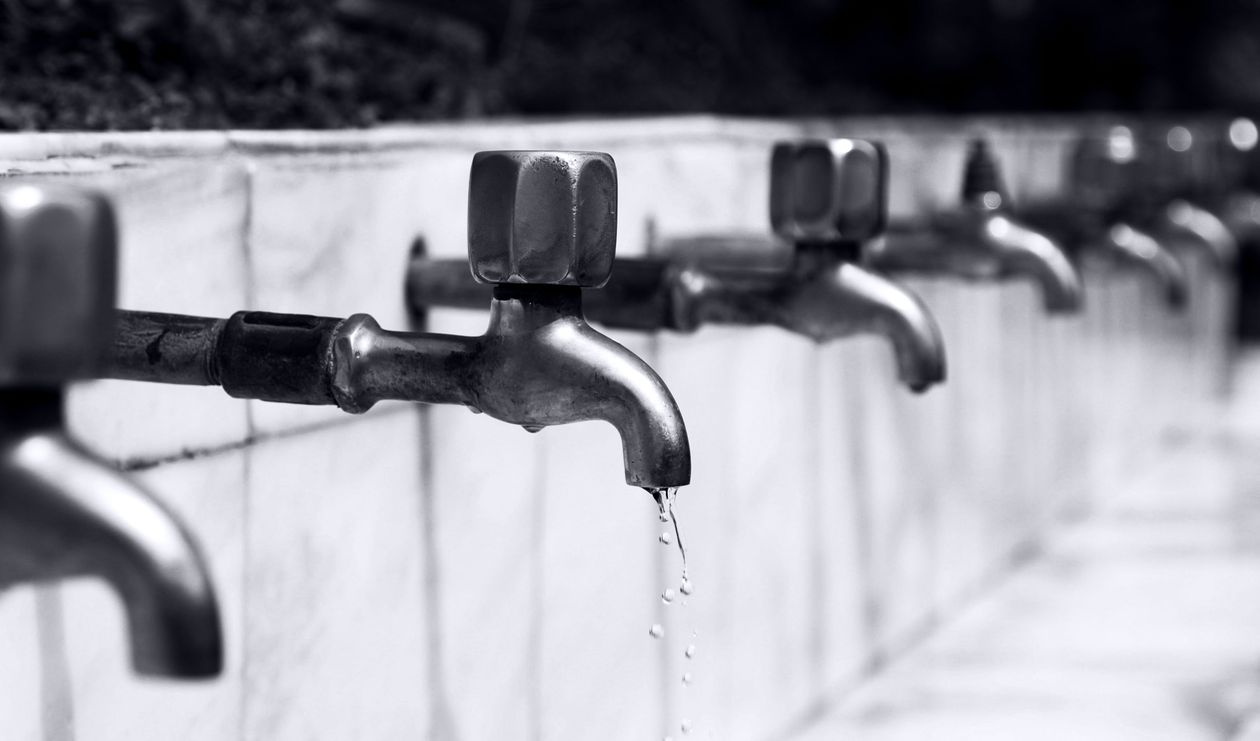
For developers, the practical takeaway is simple. Every gallon the design avoids is a gallon nobody pays to buy, heat, or drain for the life of the building.
Reducing potable demand works best as a layered strategy, and the single highest-value layer is fixture selection. Replacing older flushometer-valve toilets with WaterSense labeled models could save commercial facilities nationwide an estimated 39 billion gallons of water per year, because roughly 7 million of the 27 million such toilets installed still use 3.0 to 7.0 gallons per flush (EPA WaterSense, 2024).
Start by matching water sources to water quality needs. Not every use requires drinking-quality water. Irrigation, toilet flushing, and cooling-tower makeup can often run on captured or reused water, which frees potable supply for the uses that genuinely need it.
Metering is the second layer. Submeters on major loads such as cooling systems, kitchens, and irrigation turn a single mystery bill into actionable data. When a facility team can see where water goes, they can find the leaks and overuse that waste it.
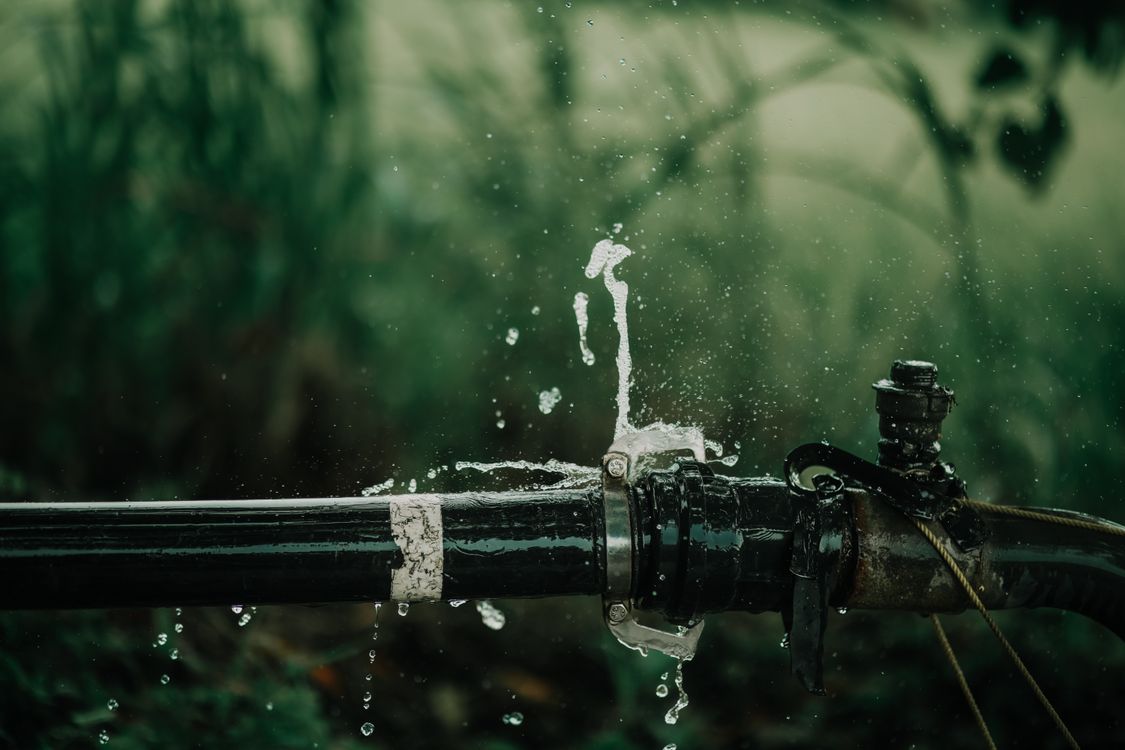
Leak control matters more than most owners expect. A small, constant leak in a buried line or a stuck flush valve can run thousands of gallons before anyone notices. Designing for accessible shutoffs, durable fittings, and early detection protects the savings the rest of the design worked to create.
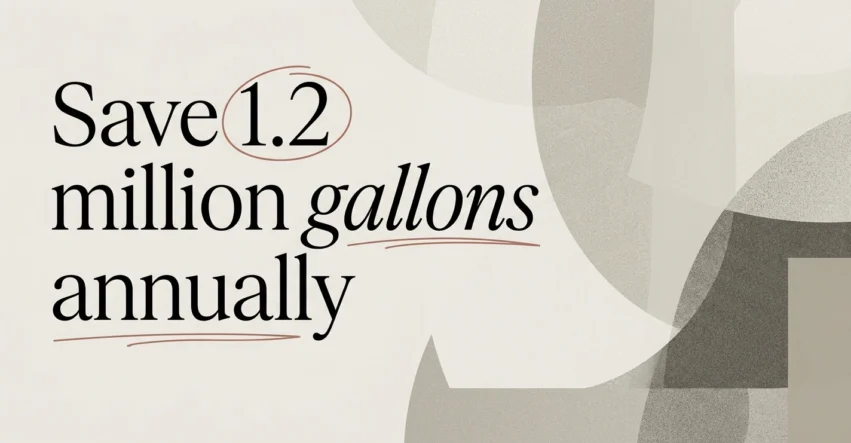
Low-flow fixtures deliver the fastest, most predictable savings in any water plan. WaterSense labeled flushometer-valve toilets use no more than 1.28 gallons per flush, a 20% reduction from the 1.6 gpf federal standard, and in a 10-story office with 1,000 occupants that upgrade can save nearly 1.2 million gallons and close to $10,000 per year (EPA WaterSense, 2024).
Fixtures are the foundation, but reuse multiplies the gains. Two systems do most of the work:
Both require careful engineering. Separate piping, filtration, storage, and clear labeling keep reused water away from potable lines and keep the system safe and code-compliant. These decisions belong in the plumbing design from the start, which is why understanding the core elements of plumbing helps developers ask the right questions.
Reuse systems carry higher upfront cost and ongoing maintenance, so they pay off best on projects with steady non-potable demand, such as hotels, hospitals, and large multifamily buildings. The engineering judgment is knowing when the return justifies the complexity.
Water-efficient design is shaped by two forces: mandatory plumbing codes and voluntary sustainability standards. The federal maximum for most toilets is 1.6 gallons per flush, and model codes such as the International Plumbing Code and Uniform Plumbing Code set baseline flow rates that every project must meet. Local jurisdictions frequently amend these with stricter limits.
Voluntary standards reward going further. The EPA WaterSense label identifies fixtures that beat the federal baseline by at least 20% while meeting performance tests, which gives specifiers a reliable shortcut when selecting products. Pairing WaterSense fixtures with reuse systems is often the cleanest route to a strong water score.
LEED is the dominant green-building framework in the US, and its water efficiency credits reward reduced indoor and outdoor water use, submetering, and process-water management. Earning those credits requires documented fixture performance and calculated savings, which means the water strategy has to be engineered and recorded, not estimated.
For developers, standards are a tool as much as a hurdle. A documented, code-compliant water plan speeds permitting, supports green certification, and gives tenants and lenders a credible efficiency story.
MEP and civil engineering is where water strategy becomes a buildable reality, because these disciplines size, route, and integrate every water system on the project. Good design does more than meet code. It coordinates plumbing, mechanical, and site systems so that fixtures, reuse loops, and drainage all work together instead of fighting each other.
On the mechanical side, cooling towers and HVAC equipment are often a building's largest single water consumers. Right-sizing this equipment and selecting efficient options reduces makeup-water demand, which ties water savings directly to the broader HVAC and mechanical system design. Plumbing design then handles fixture selection, pipe sizing, pressure management, and the separate piping that reuse systems require.
Civil engineering controls the water that touches the site. Grading, stormwater management, and permeable surfaces reduce runoff and can feed harvesting systems, while smart irrigation design cuts outdoor demand. These site decisions determine how much water the project draws from and returns to the municipal system.
This is the value an integrated engineering partner brings. At Innodez, MEP, structural, and civil teams coordinate water-using systems across commercial, healthcare, hospitality, industrial, and residential projects so that efficiency is built into the drawings rather than bolted on later. Catching a conflict or a missed reuse opportunity on paper costs far less than discovering it in the field.
The most effective water plans share one trait: they start early. By the time plumbing routing is locked, many efficiency options are off the table, so bringing engineering into schematic design is what turns water goals into measurable results.
If your next project has water-efficiency targets or a tight utility budget, bring your MEP and civil requirements to an engineering team during schematic design, and ask them to model fixture savings and reuse options before the plumbing layout is fixed.
It covers all water a project consumes across domestic fixtures, cooling and heating systems, irrigation, and process loads, plus the water lost to leaks. MEP and civil engineers size and specify these systems during design.
WaterSense labeled flushometer-valve toilets cut flush volume by 20% versus the federal standard. A large office can save well over a million gallons a year by replacing older fixtures, according to EPA WaterSense.
Many jurisdictions permit greywater and rainwater reuse, but rules vary by state and local amendment. Treatment, signage, and separate piping are typically required, so confirm requirements with the authority having jurisdiction early in design.
As early as schematic design. Fixture counts, reuse systems, metering, and code compliance are far cheaper to plan upfront than to retrofit after the plumbing layout is fixed.


