
- Mon-Fri 9am-5pm
- [email protected]
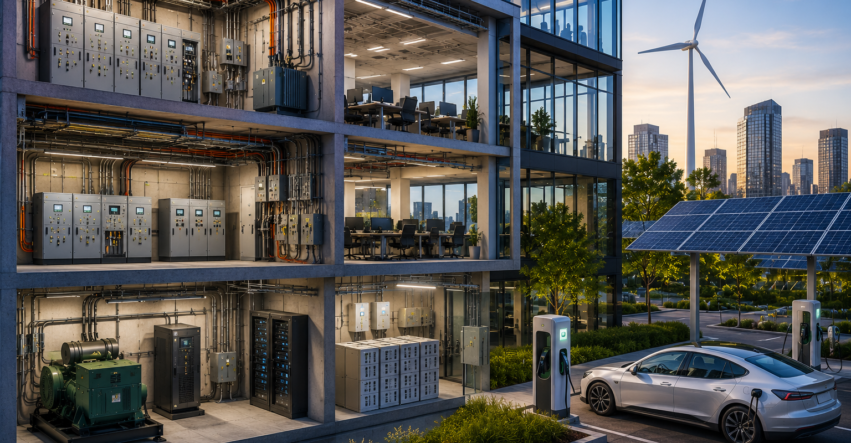
Electrical infrastructure is the backbone of every modern building. From powering essential systems to supporting renewable energy integration and electric vehicle charging, a well-designed electrical system ensures safety, efficiency, reliability, and long-term performance.
As buildings become smarter and more energy-conscious, electrical engineering has evolved beyond simply supplying power. Today, it involves designing resilient systems capable of supporting advanced technologies, minimizing energy waste, and adapting to future demands.
At InnoDez, our electrical engineering team delivers comprehensive power distribution and electrical system designs tailored to commercial, residential, healthcare, industrial, educational, and mixed-use developments.
A properly designed electrical system provides:
Poor electrical planning can lead to overloaded systems, costly upgrades, unexpected outages, and increased operational risks.
Every building requires carefully coordinated electrical systems, including:
Power distribution begins with incoming utility service and extends throughout the building.
Design considerations include:
Proper distribution minimizes voltage drops while maximizing system reliability.
Accurate load calculations are essential before designing any electrical system.
Engineers evaluate:
Proper load analysis prevents overloaded circuits while optimizing equipment sizing.
Many facilities require uninterrupted power during outages.
Backup systems may include:
Critical facilities such as hospitals, data centers, and manufacturing plants rely heavily on redundant power systems.
Modern buildings increasingly integrate renewable energy into their electrical infrastructure.
Common solutions include:
Proper electrical design ensures renewable systems operate safely and efficiently alongside utility power.
As electric vehicle adoption continues to grow, commercial and residential developments must prepare for increased charging demand.
Electrical engineers design:
Planning EV infrastructure during design is significantly more cost-effective than retrofitting later.
Electrical systems must continue operating even during challenging conditions.
Modern designs often include:
These features improve building resilience while reducing operational risks.
Digital technologies have transformed electrical infrastructure.
Today’s smart systems include:
These technologies provide facility managers with valuable insights that improve efficiency and reduce maintenance costs.
Electrical systems must be carefully coordinated with architectural, structural, mechanical, and plumbing disciplines.
Using Building Information Modeling (BIM), engineers can:
Integrated BIM workflows streamline construction and improve project outcomes.
InnoDez supports electrical engineering projects across numerous sectors, including:
Each building type has unique electrical requirements that demand specialized engineering expertise.
Working with experienced electrical engineers provides:
At InnoDez, we provide integrated electrical engineering solutions that support safe, efficient, and future-ready buildings. Our team combines technical expertise with advanced BIM coordination to deliver reliable electrical infrastructure for projects of every scale.
Whether designing power distribution systems, backup power solutions, renewable energy integration, or EV charging infrastructure, we help clients create buildings that perform efficiently today while remaining adaptable for tomorrow’s technological advancements.


