
- Mon-Fri 9am-5pm
- [email protected]

The biggest MEP design trends in 2026 are electrification, smart building automation, prefabrication, decarbonization, and AI-assisted modeling. Each one changes how mechanical, electrical, and plumbing systems get designed, coordinated, and installed, and together they are reshaping project budgets and timelines for developers across commercial, healthcare, hospitality, industrial, and residential work.
For developers, these shifts are not abstract. They affect which systems pass code, how fast a building gets occupied, and what the energy bill looks like for the next thirty years. The six trends below are the ones having the clearest effect on real projects right now, with practical notes on what to do about each.
All-electric design has moved from a niche choice to a default assumption on many new projects. In 2024, 52% of single-family homes were built with electric heating, up from just 39% in 2015, according to U.S. Census data reported by Canary Media. The same analysis shows 4.1 million air-source heat pumps shipped in the U.S. in 2024 against 3.1 million gas furnaces.
For MEP design, electrification touches every discipline. Heating and cooling loads shift onto heat pumps and variable refrigerant flow systems. Electrical rooms grow to handle larger service capacity, EV charging, and battery storage. Plumbing teams design around heat pump water heaters instead of gas-fired units.
What this means for developers: service capacity and electrical room sizing need to be settled early, because adding capacity late is expensive and can delay occupancy. The trade-offs are easiest to manage when energy efficiency is built into the MEP design from the first concept sketch.
Buildings are becoming data sources. Networked sensors now track occupancy, temperature, humidity, air quality, and equipment health, feeding a building automation system that adjusts HVAC and lighting in real time. The payoff is lower energy use and faster response when something starts to fail.
The design implication is that MEP engineers now plan the sensor and controls layer alongside the physical systems. That means specifying network infrastructure, deciding which data points matter, and making sure controls integrate cleanly rather than arriving as a patchwork of vendor systems that do not talk to each other.
For developers, the value shows up in operating cost and tenant satisfaction. Healthcare and hospitality projects benefit most, since both depend on tight environmental control. Getting the controls strategy right early avoids costly retrofits once the building is occupied.
Prefabrication moves fabrication off the job site and into a controlled shop, where pipe racks, mechanical skids, and electrical assemblies get built to spec and delivered ready to install. The result is faster installation, less waste, and more predictable quality.
The financial case is becoming hard to ignore. Contractors with prefabrication rates above 60% reported a 14.5% median revenue increase, compared with 4.5% for the industry overall, per a 2025 State of MEP survey summarized by Contractor magazine.
Prefabrication depends on accurate models and tight coordination, because shop-built assemblies leave little room for field adjustment. That makes clash-free design essential, since a single missed conflict can idle a prefab delivery and stall the install crew waiting on it.
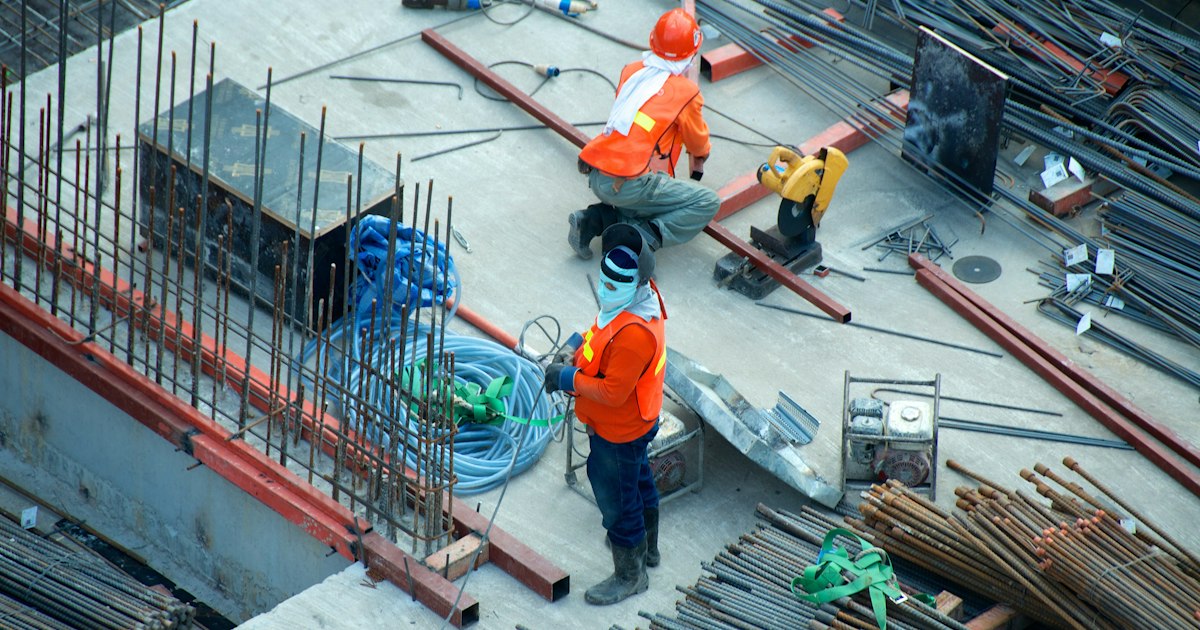
Decarbonization has shifted from a marketing line to a design constraint. Buildings carry a large share of global emissions, and regulators are tightening requirements. The U.S. Department of Energy's clean energy rule for federal buildings pushes new projects toward steep fossil fuel reductions, with full elimination of on-site fossil fuel use targeted for the end of the decade.
Even when a project is not federal, these rules set the direction the broader market follows. MEP teams respond by modeling energy performance early, choosing low-carbon systems, and documenting operational carbon so owners can meet reporting obligations.
For developers, the practical move is to set a carbon target at the concept stage rather than bolting it on later. Early decisions about envelope, system type, and on-site generation determine whether a net-zero goal is achievable without blowing the budget.
AI is starting to handle the repetitive parts of MEP design. Tools now help with clash detection, routing options, load calculations, and early energy modeling, which frees engineers to focus on judgment-heavy decisions. Adoption is still early across the industry, so the firms building the habit now are ahead of those waiting for the technology to mature.
AI works best when it sits on top of a solid model. That is why building information modeling remains the foundation: clean, coordinated models give AI tools reliable data to work from, and a messy model produces unreliable output no matter how capable the software is.
AI does not replace engineers. It compresses the time spent on first-pass layouts and routine checks, while the engineer still owns code compliance, coordination, and the final design. For developers, the benefit is faster iteration and fewer surprises in the field.
The common thread across all five trends is that early decisions carry the most weight. Waiting until construction documents to address electrification capacity, controls strategy, prefabrication, or carbon targets limits your options and raises costs.
A few concrete moves put a project ahead:
Having these capabilities under one roof shortens the feedback loop between disciplines, which is a core reason developers work with an integrated firm. Innodez delivers coordinated MEP, structural, and civil design so these decisions get made together rather than in silos.
The trends above are not arriving one at a time. Electrification, automation, prefabrication, decarbonization, and AI are converging on the same projects at once. The next step is simple: before your next project moves past concept, book a planning session with your MEP engineer and decide which of these five shifts your building needs to account for, and how early each one has to be designed in.
Rising adoption of heat pumps, falling costs relative to gas infrastructure, and decarbonization rules are the main drivers. In 2024, electric heating reached 52% of new single-family homes.
Evidence points that way. Contractors with prefabrication rates above 60% reported a 14.5% median revenue increase versus 4.5% for the industry overall, alongside faster schedules and less on-site waste.
No. AI currently assists with tasks such as clash detection, energy modeling, and early layout options. Engineers still own design decisions, code compliance, and coordination.
Choose an MEP partner fluent in all-electric design and BIM-driven prefabrication, set a decarbonization target early, and pilot AI tools on one project before scaling.


