
- Mon-Fri 9am-5pm
- [email protected]
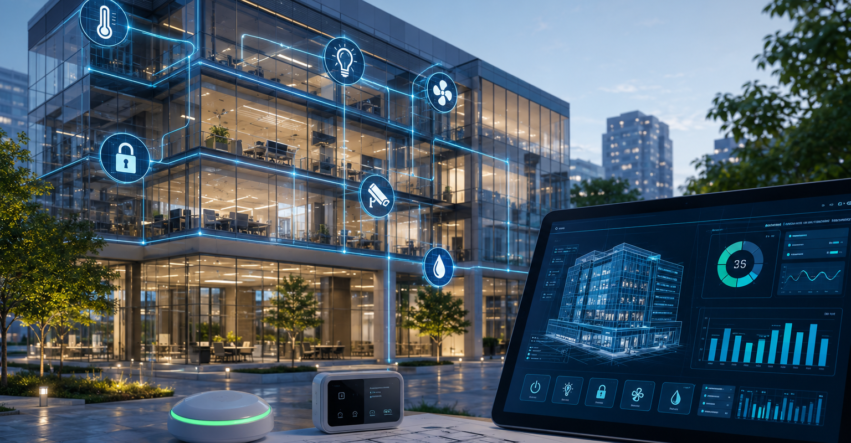
Technology is rapidly changing how buildings are designed, operated, and managed. Today’s commercial, residential, healthcare, and mixed-use developments are expected to deliver more than just functional spaces—they must also provide energy efficiency, occupant comfort, operational flexibility, and data-driven insights.
This growing demand has accelerated the adoption of smart building technologies and Building Automation Systems (BAS).
Smart buildings use interconnected technologies to monitor, control, and optimize building operations in real time. Through automation, sensors, and data analytics, these buildings can operate more efficiently, reduce costs, and improve the experience of occupants.
As digital transformation continues to reshape the construction industry, smart buildings are becoming an essential component of modern building design.
A smart building is a facility that uses advanced technologies and integrated systems to automatically monitor and manage building operations.
These systems collect and analyze data from various building components, allowing owners and facility managers to make informed decisions that improve performance and efficiency.
Smart buildings typically integrate:
By connecting these systems into a centralized platform, buildings become more responsive, efficient, and easier to manage.
A Building Automation System (BAS) is the technology platform that controls and coordinates various building systems through centralized software and automated processes.
A BAS can:
Instead of managing each system independently, building operators can monitor and control all major systems from a single interface.
Modern buildings have become increasingly complex.
Without automation, managing these systems manually can be time-consuming, inefficient, and expensive.
Building automation helps address several challenges, including:
As a result, smart technologies are becoming a valuable investment for property owners and developers.
Energy efficiency is one of the primary reasons organizations invest in smart building technologies.
Buildings account for a significant portion of global energy consumption, and inefficient operations can lead to substantial utility expenses.
Building automation systems can improve energy performance by:
These strategies can significantly lower operating costs while supporting sustainability goals.
Heating, ventilation, and air conditioning systems typically represent one of the largest energy consumers in commercial buildings.
Smart HVAC technologies allow building operators to:
Advanced control strategies improve occupant comfort while reducing energy consumption and extending equipment life.
Lighting automation is another important component of smart buildings.
Modern lighting systems can:
These features improve efficiency while creating more comfortable environments for building occupants.
The success of a building is often measured by the experience it provides to its occupants.
Smart building technologies help create healthier and more comfortable indoor environments by monitoring:
These systems can automatically adjust building conditions to improve comfort and productivity.
In office environments, this can lead to improved employee satisfaction and performance.
In residential and healthcare settings, enhanced comfort can significantly improve the overall user experience.
One of the most valuable benefits of smart buildings is the ability to move from reactive maintenance to predictive maintenance.
Traditional maintenance strategies often rely on scheduled inspections or emergency repairs.
Smart building technologies continuously monitor equipment performance and identify issues before failures occur.
Examples include:
Predictive maintenance helps:
This proactive approach can generate substantial long-term savings.
Sustainability has become a major priority across the construction industry.
Building automation systems support sustainability initiatives by helping organizations:
Many green building certifications, including LEED and WELL standards, encourage the implementation of intelligent building technologies.
As environmental regulations become more stringent, smart building systems will continue to play an important role in achieving sustainability goals.
The Internet of Things (IoT) has significantly expanded the capabilities of smart buildings.
IoT devices use sensors and connected technologies to collect real-time information from building systems.
Examples include:
This real-time data enables building operators to make better decisions and improve overall building performance.
Modern smart buildings also integrate advanced security systems.
Building automation platforms can coordinate:
This integrated approach improves both safety and operational efficiency.
Digital twin technology is increasingly being combined with building automation systems.
A digital twin creates a virtual representation of the building that continuously receives real-time operational data.
This allows building owners to:
The combination of building automation and digital twin technologies represents the next generation of intelligent building management.
Although smart technologies may require additional investment during construction, the long-term benefits often provide a strong return on investment.
Potential financial benefits include:
For many organizations, these savings significantly outweigh the initial implementation costs.
Successful smart buildings rely heavily on coordinated MEP engineering.
Mechanical, electrical, plumbing, and technology systems must work together seamlessly.
Proper engineering design ensures:
Without careful coordination, smart building technologies may fail to deliver their full potential.
At InnoDez, we help clients integrate intelligent technologies into their projects through our expertise in:
Our multidisciplinary approach ensures that smart technologies are integrated efficiently and support the long-term goals of building owners and developers.
By combining innovative engineering solutions with practical building expertise, we help create facilities that are efficient, adaptable, and prepared for the future.
Smart buildings and building automation systems are transforming how facilities are designed, operated, and maintained.
Through advanced technologies, automation, and data-driven decision-making, these buildings provide greater efficiency, lower operating costs, improved sustainability, and enhanced occupant experiences.
As technology continues to evolve, smart building solutions will become increasingly important in creating resilient, future-ready buildings.
For developers, property owners, and facility managers, investing in intelligent building technologies is no longer simply a trend—it is a strategic decision that delivers long-term value and competitive advantages throughout the building lifecycle.


